
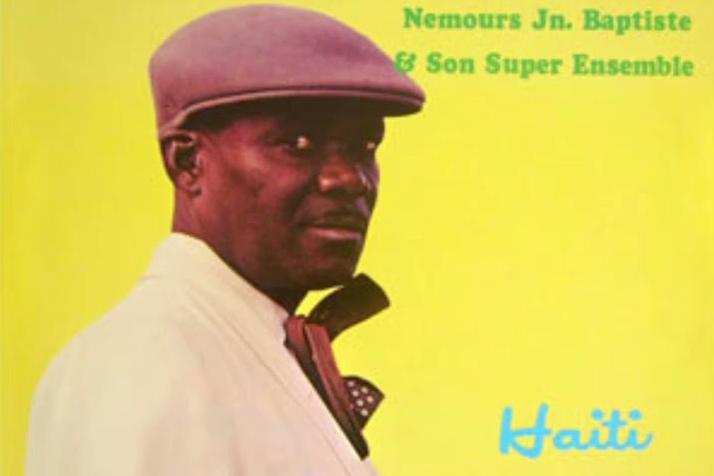
Created on July 26, 1955 by saxophonist Nemours Jean-Baptiste, compas direct has become much more than just a dance rhythm.
Created on July 26, 1955, by saxophonist Nemours Jean-Baptiste, compas direct has become much more than just a dance rhythm. Born from the fusion of meringue, jazz, Vodou traditions, and Caribbean sounds, it has transcended generations, reinventing itself without ever denying its roots. From its pioneers to the major ensembles that have shaped its evolution, this is a look back at the history of a musical heritage that continues to resonate deeply within Haiti and shine far beyond its borders.
A look back at history
Born from a blend of meringue, jazz, Caribbean rhythms, and Vodou traditions, compas direct, a musical genre designed for dancing, was created on July 26, 1955, by saxophonist Nemours Jean-Baptiste in Place Sainte-Anne, Port-au-Prince. Originating within the Ensemble aux Calebasses, founded by this great musician, this new melodic style modernized and revitalized the Haitian music scene. Since then, it has continued to evolve over the decades.
Destinoble Barrateau, maestro and saxophonist of the Panorama des Cayes, is considered one of Nemours Jean-Baptiste’s principal mentors. During their meetings in the country’s third-largest city, he first introduced him to the clarinet, then to the saxophone, leading him to abandon the banjo in favor of a wind instrument. Destinoble Barrateau thus contributed to forging the musical skills that would allow Nemours Jean-Baptiste to create compas direct in 1955.
Two years after the birth of compas direct, Jean Gesner Henry, better known as Coupé Cloué, founded Trio Sensationnel in 1957, which later became Ensemble Select. This group would leave a lasting mark on the history of compas thanks to its “konpa mamba” style and its vivid lyrics.
Founded in 1963 in Cap-Haïtien, the Tropicana Orchestra of Haiti remains one of the most prestigious ensembles in the country. Nicknamed “Haiti’s Golden Rocket,” it has profoundly marked the history of compas music through the richness of its percussion, the finesse of its melodies, and its immense contribution to the national musical heritage.
The golden age of the compass
La même année, à Pétion-Ville, Lyonel Déjean fonde les « Frères de Pétion-Ville », qui deviendront par la suite les Frères Déjean. En introduisant un important pupitre de cuivres — saxophones, trompettes et trombones —, l’orchestre impose une signature sonore qui le distingue de toutes les autres formations de l’époque. Onze ans plus tard, le groupe enregistre son premier album, Haïti, qui annonce l’âge d’or du compas.
Une nouvelle évolution s’amorce au milieu des années 1960 avec l’apparition des « mini-jazz », des groupes plus jeunes et de formation réduite, inspirés par le rock et la pop. En décembre 1965, Les Shleu-Shleu, fondé par Tony Moïse et dirigé par Dada Jacaman, révolutionne le compas direct en popularisant ce nouveau courant, caractérisé par un effectif restreint, un son urbain et un rythme plus soutenu destiné à séduire la jeunesse.
En 1967 naît à Pétion-Ville Los Incognitos, fondé par Albert Chancy Jr. et Herman Nau. Rebaptisé Tabou Combo Super Star en 1968, l’ensemble deviendra l’un des groupes haïtiens les plus célèbres sur la scène internationale.
Au cours des années 1970 et au début des années 1980, plusieurs formations donnent un nouvel élan au compas : les Gypsies de Pétion-Ville, fondés par le guitariste Robert Martino après son départ des Difficiles de Pétion-Ville, Caribbean Sextet, Dixie Band, Zèklè, Mini All Stars, DP Express, System Band, Skah Shah, GM Connection et Magnum Band.
Fondé en 1976 par les frères Pasquet, notamment André « Dadou » et Claude « Tico » Pasquet, Magnum Band imprime au compas un style raffiné où se mêlent romantisme, jazz, funk et reggae. Des morceaux comme Close the Door demeurent gravés dans la mémoire des amateurs. Toutes ces formations ont profondément transformé la scène musicale haïtienne grâce à des arrangements novateurs, des guitares rythmées et des sonorités qui invitaient autant à l’écoute qu’à la danse.
En 1981, Gemini All Stars, créé par Antoine Rossini Jean-Baptiste, dit Ti Manno, marque à son tour le compas direct par des textes engagés et des sonorités enracinées dans la tradition. Avec des chansons comme Nèg kont nèg et Nan danje, le groupe fait du compas bien plus qu’une musique de divertissement : il en fait une tribune sociale et politique, porteuse des aspirations du peuple haïtien.
Le recul de l’instrumentation acoustique
In the late 1980s, compas music underwent another transformation with the arrival of drum machines and synthesizers. In 1989, Super Star Music Machine, featuring Edner Couloute, Adolphe Chancy, Miguel Baptista, and Claude Marcelin, adopted a sound more influenced by pop, funk, and electronic music in order to appeal to a younger audience. The group had several hits, including “Superstar rive , ” ” Souffrance ,” “La Familia, ” and “Alpha .” This modernization, however, sparked debate, with some purists lamenting the decline of acoustic instrumentation in favor of technology.
Since its creation on July 26, 1955, compas direct has far surpassed the realm of dance music. It has become one of the strongest symbols of Haitian cultural identity, a powerful factor of social cohesion, and a remarkable ambassador of national culture.
Carried by several generations of musicians, it continues to bring renown to Haiti throughout the world. Its inscription on UNESCO’s Representative List of the Intangible Cultural Heritage of Humanity recognizes this artistic wealth and confirms compas’s place among the greatest universal musical expressions. Despite the criticisms that have accompanied its various transformations, it remains today one of the pillars of Haitian identity and pride.
